
E-3 visa guide
Quarterly DOL LCA analysis: 2026-Q1
Quarterly analysis of public DOL LCA filing data with methodology caveats.
By Kelvin Tran · 7 min read · Published May 10, 2026
Reviewed by Kelvin Tran, Admitted in New York and Victoria, Australia
Quarterly highlights
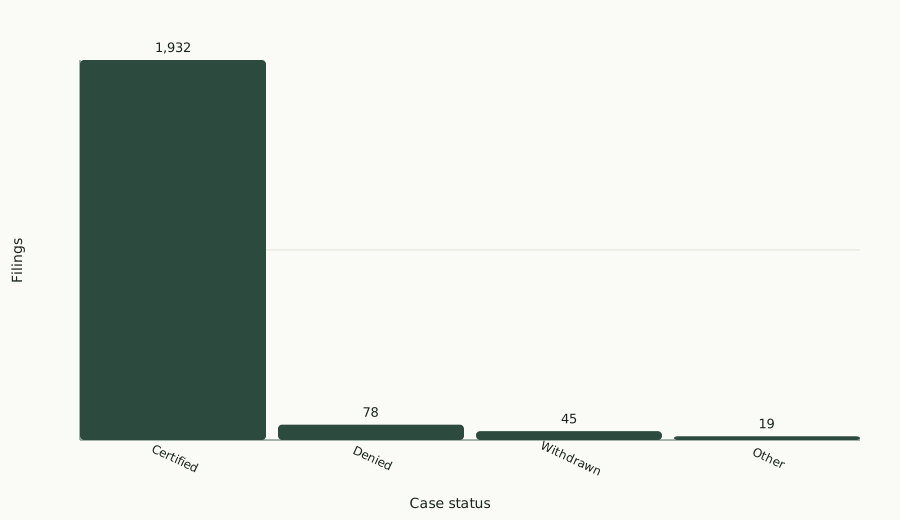
E-3 labor condition application activity in 2026-Q1 came in at 2,074 filings, with 1,932 certified outcomes, or 93.15% of the total. Denied filings accounted for 78 cases (3.76%), and withdrawn filings made up 45 cases (2.17%). A quick reminder matters here: LCA filings are not visa issuances. They are employer disclosures tied to the labor certification step, not the final grant of a visa.
The public disclosure file for this quarter is available here. It contains no worker-level PII, and the employer names in this analysis were deduped so that similar entries could be grouped consistently for reporting.
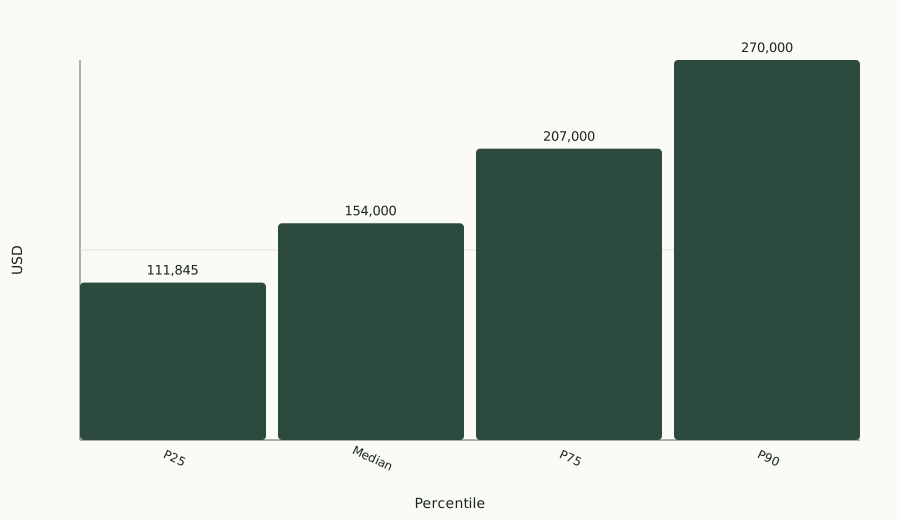
The wage picture is still notably strong. Across 2,065 annualized wage observations, the median offered wage was $154,000, while the mean was $169,462. The spread is wide: the 25th percentile sits at $111,845, and the 75th percentile reaches $207,000. That gap tells you this is not a single-pay-band market; it spans everything from mid-six-figure technical and management roles to lower-paid support and field positions.
E-3 LCA outcomes (2026-Q1)
Data snapshot (2026-Q1)
- Total filings: 2,074
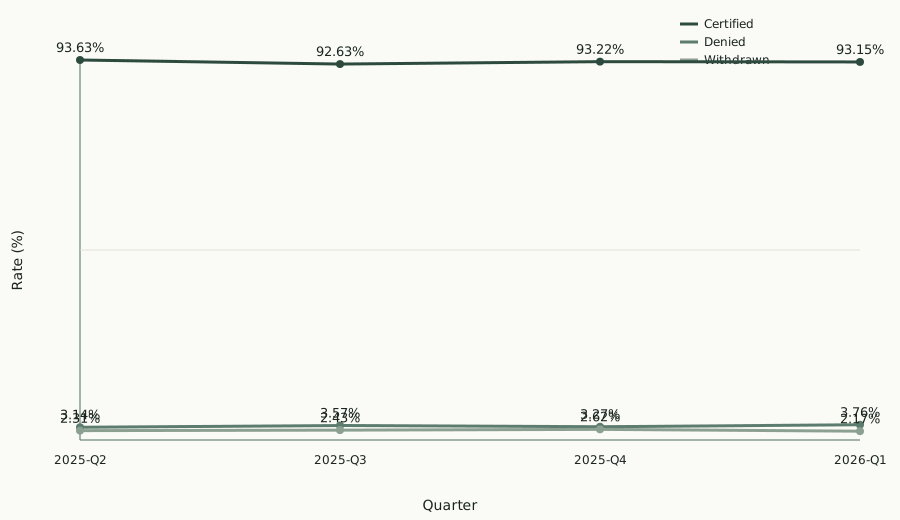
- Certified: 1,932 (93.15%)
- Denied: 78 (3.76%)
- Withdrawn: 45 (2.17%)
- Median annualized wage: $154,000 (p25 $111,845, p75 $207,000)
Four-quarter snapshot
- Window: 2026-Q1 -> 2025-Q4 -> 2025-Q3 -> 2025-Q2
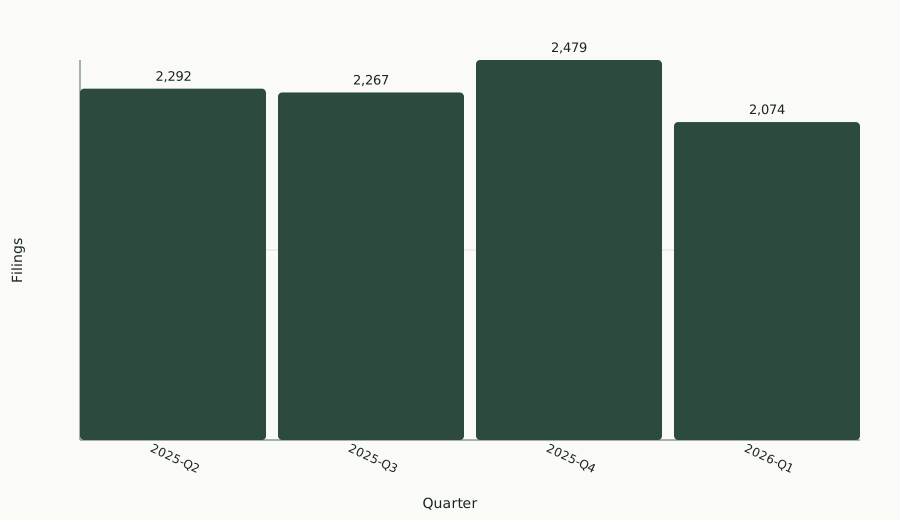
- QoQ filings delta: -405 (-16.34%)
- Filings vs three quarters ago: -218 (-9.51%)
- QoQ certified-rate change: -0.07 percentage points
- QoQ median annualized wage delta: $4,000 (2.67%)
Four-quarter comparative insights
Looking across the four-quarter window, this quarter’s filing count is lower than the recent peak, but the more interesting story is how stable the outcome mix remains. Certification has stayed above 92% in every quarter shown, which suggests that the basic filing pipeline is still functioning with a fairly consistent approval pattern. The chart on status rates makes that steadiness easy to see.
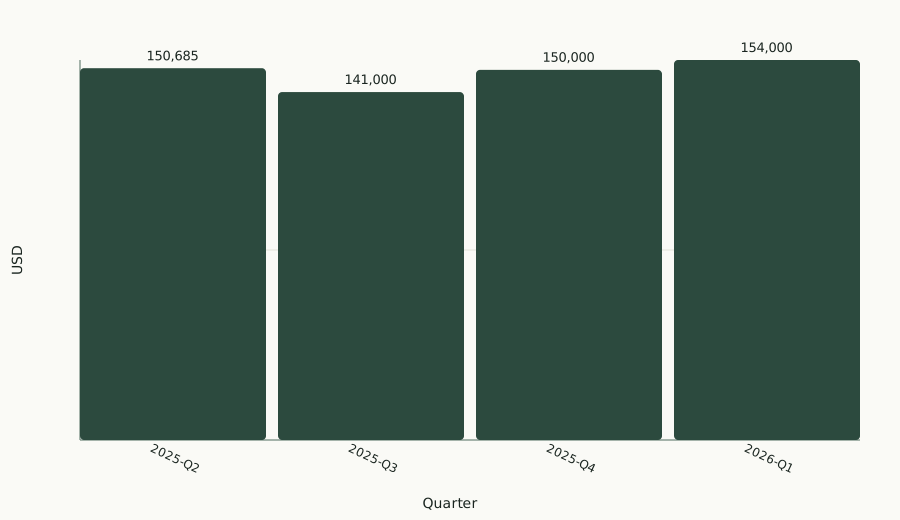
The median wage has also edged upward within the window, landing at $154,000 in 2026-Q1. That is not a dramatic jump, but it does reinforce that the sponsored role mix remains tilted toward higher-skill, higher-compensation positions. In practical terms, employers are still using the program for roles where the wage floor is meaningful and the labor market is competitive.
Four-quarter filings trend
Status-rate trend by quarter
Wage insights
The wage distribution is worth reading as a market signal, not just a compliance metric. A median of $154,000 and a 90th percentile of $270,000 point to a substantial upper tail. In other words, a meaningful share of filings sit in executive, specialist, and senior technical territory rather than in a narrow band of standard professional pay.
That shows up in the role mix too. The wage-percentiles chart helps explain why the mean is higher than the median: a smaller set of very high offers pulls the average up. For employers, that usually means the filing population is being shaped by a blend of elite technical hiring and leadership hiring, not just routine backfill.
Annualized wage percentiles (2026-Q1)
Median wage trend by quarter
Occupation insights
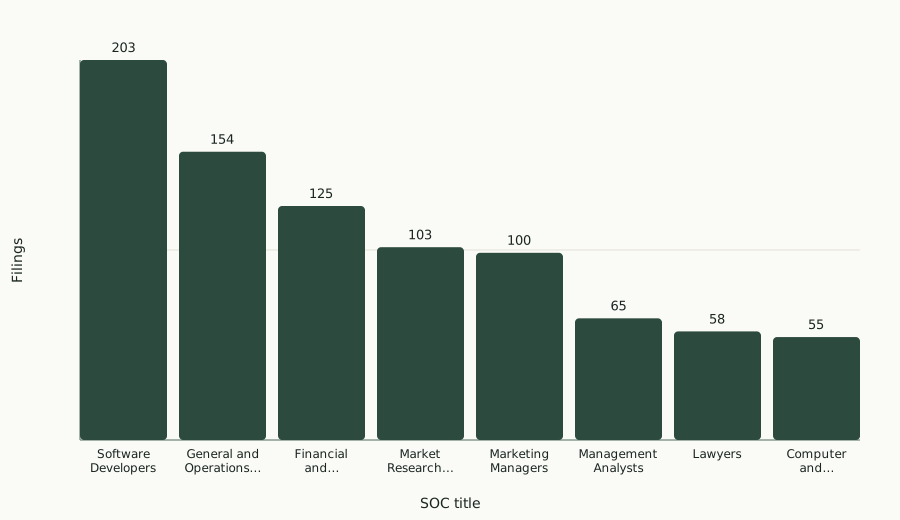
Software remains the anchor. Software Developers led all SOC categories with 203 filings, or 9.79% of the total, at a median annual wage of $175,000. But the broader mix is more varied than a simple tech story. General and Operations Managers posted 154 filings, Financial and Investment Analysts had 125, and Marketing Managers reached 100. That combination suggests employers are using E-3 filings for both technical and business-facing roles.
A few titles stand out because they show how broad the filing universe can be. Software Engineer was the top job title at 47 filings, but the list also includes Associate, Chief Executive Officer, Vice President, and even Paramedic and Airline Pilot. That diversity matters: it shows the dataset is not confined to one industry cluster, even though tech and finance clearly dominate the upper end of the wage scale.
Top SOC occupations (2026-Q1)
Geographic insights
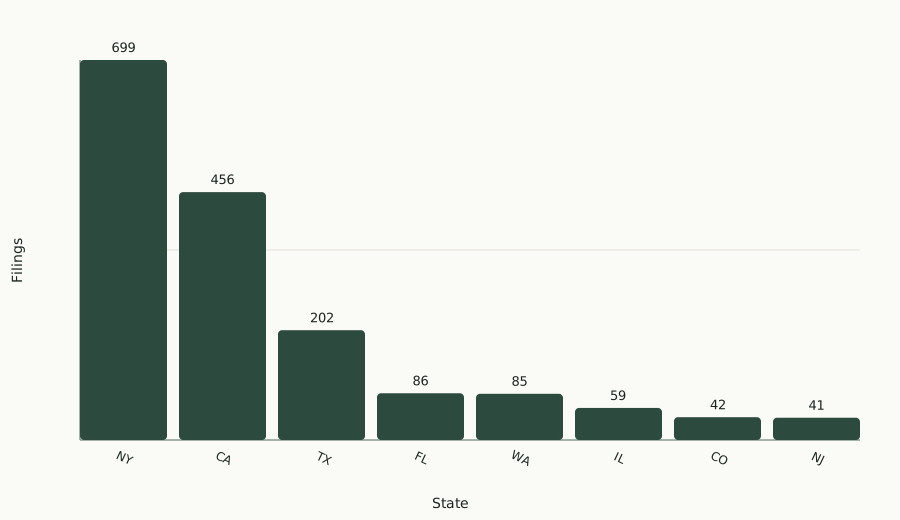
The geography is heavily concentrated. New York led with 699 filings, representing 33.7% of the quarter’s total, followed by California at 456 filings (21.99%) and Texas at 202 filings (9.74%). Together, those three states account for well over half of all filings. The top-states chart makes the concentration obvious, but the wage medians add another layer: WA posted a median annual wage of $180,722, while NY and CA were also firmly in high-wage territory.
That concentration matters because it suggests the E-3 market is being driven by a relatively small number of major labor markets, especially in finance, technology, and large professional-services hubs. Florida, Illinois, Colorado, and New Jersey all appear, but at much smaller scale.
Top worksite states (2026-Q1)
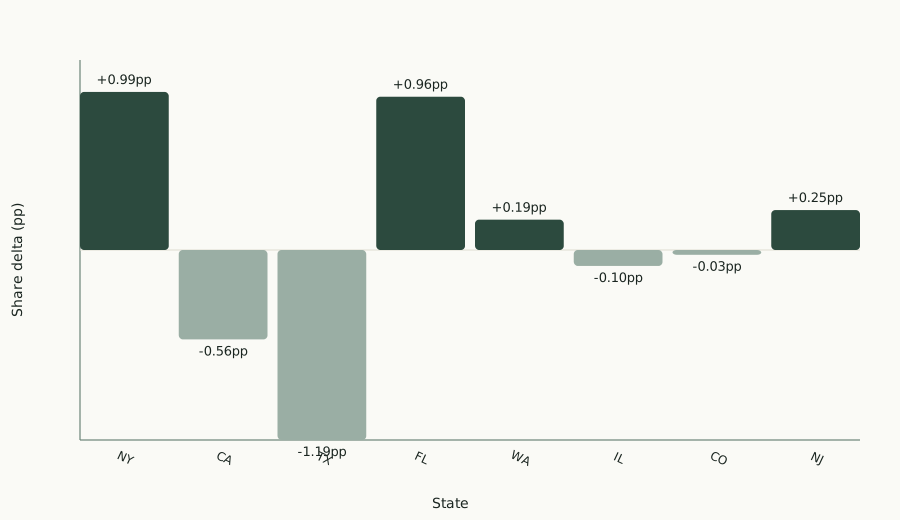
Top state share shift vs prior quarter
Employer concentration snapshot
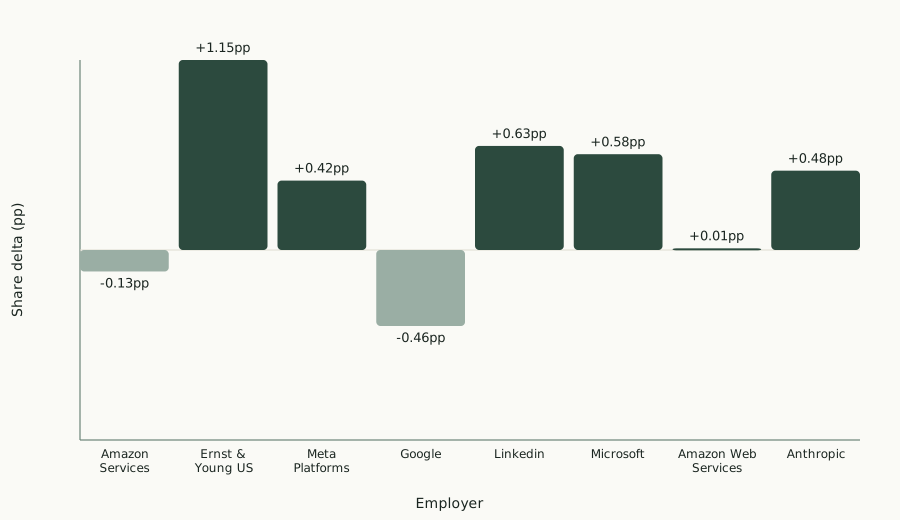
The employer list is led by large, familiar names: Amazon Services (40), Ernst & Young US (39), Meta Platforms (28), Google (18), Linkedin (13), Microsoft (12), Amazon Web Services (11), and Anthropic (10). This is a concentrated market, but not an exclusive one. The share-shift chart suggests some movement among the biggest filers, yet the overall picture remains dominated by a handful of large employers with repeated filing activity.
One detail worth noting: because employer names were deduped for this analysis, the counts are cleaner than raw disclosure text would otherwise allow. That makes the concentration snapshot more useful for market reading, while still staying within the bounds of public disclosure data.
Top employer share shift vs prior quarter
Potential drivers
It is tempting to read these numbers as a direct hiring forecast, but that would overstate what the data can prove. A more careful interpretation is that filing patterns likely reflect a mix of hiring plans, role mix, internal mobility, and disclosure timing. The quarter’s lower filing count may also be influenced by how employer reporting lands in a given snapshot, rather than any single market event. The Department of Labor’s performance and disclosure cadence can matter here (DOL performance data).
Wage movement may also be tracking broader labor-cost pressure in a loose, non-causal sense. The latest Employment Cost Index release from BLS shows continued wage growth in the broader economy (BLS ECI), which is at least directionally consistent with the higher median offered wage in this quarter. And because sponsored hiring tends to respond to open-position volume and labor demand, the occupational mix can shift as firms prioritize different functions (BLS JOLTS). None of that proves causation, but it does help explain why the filing mix can feel both stable and selective at the same time.
Possible explanations worth watching from public source context:
- Filings moved down by -16.34% quarter-over-quarter, which can reflect quarter-specific disclosure timing and reporting cadence as datasets are refreshed. (dol-performance)
- Median offered wages changed up by 2.67% QoQ, directionally consistent with broader wage-cost movement reported in national labor-market releases. (bls-eci)
- Demand for sponsored roles can shift with overall hiring conditions and open-position volume, potentially influencing which occupations and employers appear in the quarterly filing mix. (bls-jolts)
- Policy and compliance updates across employer-sponsored visa programs may influence employer planning behavior and filing strategies, even when this dataset is specific to LCAs rather than visa adjudications. (uscis-h1b-modernization)
Methodology & limitations
- LCA filings are not visa issuances, and should not be interpreted as visa approvals.
- Withdrawn does not mean denied; withdrawals often reflect business or candidate changes.
- Employer names were deduped using canonicalization rules (for example, Google LLC and Google Inc. are treated as one employer).
- This analysis uses public-disclosure data from DOL LCA records and includes no worker-level PII.
Related reading
- The complete E-3 visa guide for core category fundamentals.
- The Labor Condition Application (LCA) for E-3 visas for field-level compliance detail.
- E-3 visa process: step-by-step for execution planning from offer to interview.